The process
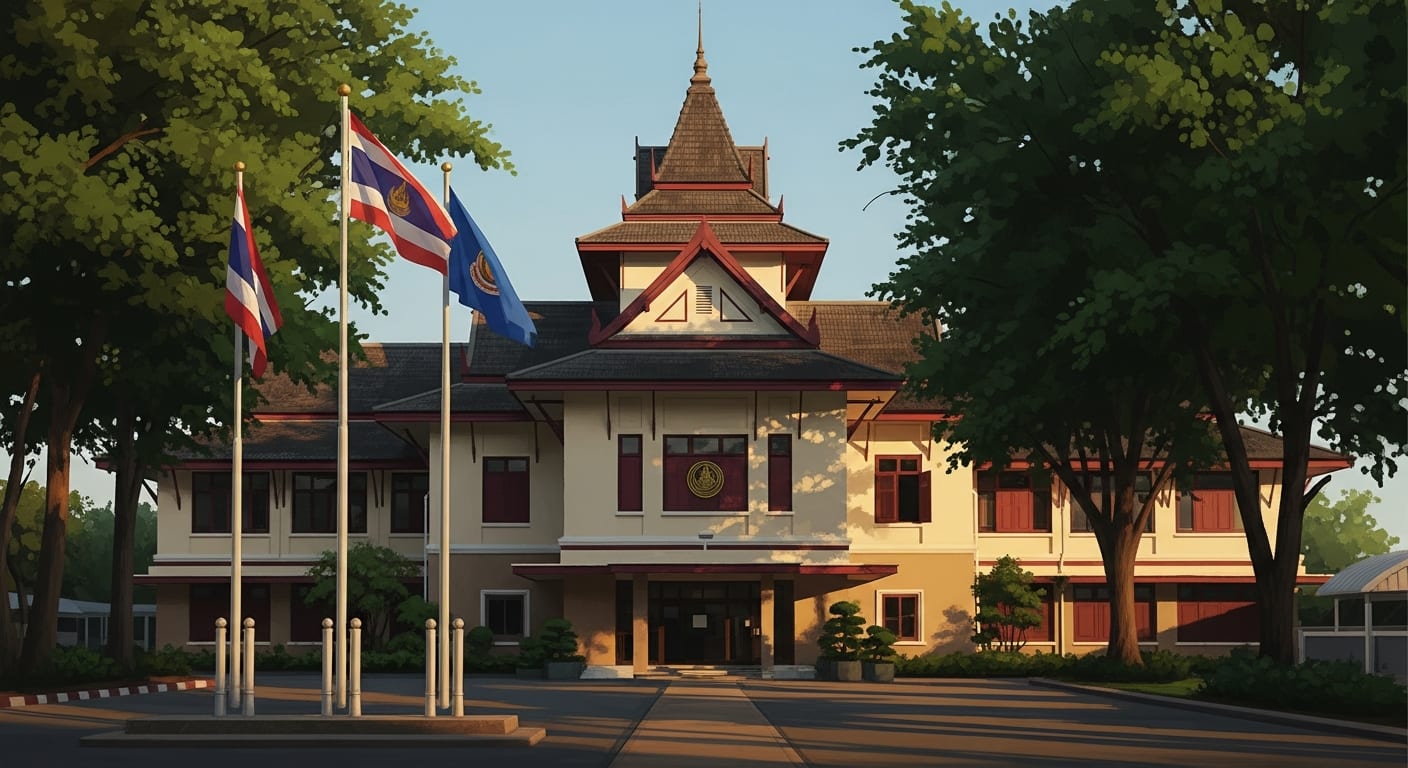
Property transfers in Thailand are registered at the local Land Office (สำนักงานที่ดิน). It is not a notary, not an escrow agent, not a lawyer's office. The Land Office is the government registry where ownership actually changes hands. Both parties (or their authorised representatives under power of attorney) must attend in person.
For properties in Pattaya and most of East Coast Chonburi, the competent office is the Chonburi Provincial Land Office, Bang Lamung Branch (สำนักงานที่ดินจังหวัดชลบุรี สาขาบางละมุง), 398 Moo 10, Bang Lamung 20150. Properties in Jomtien, Pratumnak, and Naklua all file here. Sattahip-side land routes through the Sattahip branch instead.
Before the Land Office
Reservation and sale agreement. A reservation (often THB 50,000 to 200,000) holds the unit for a short window. The full Sale and Purchase Agreement follows, typically with a deposit of 10 to 30 percent of the purchase price for resale, or a structured payment schedule for off-plan. The agreement is a private contract; it is not registered until Land Office day.
Due diligence. Counsel verifies title deed type (Chanote / Nor Sor 4 Jor is the strongest; Nor Sor 3 Gor is acceptable for land; condominium units issue Or Chor 2 unit titles), encumbrances and mortgages, common-area debt, building permits, EIA approval (for projects of 80+ residential units or 4,000+ sqm), juristic-person bylaws, and the foreign-quota status of the building.
Foreign quota letter. For condominium freehold by a foreign buyer, the juristic person must issue a letter confirming the unit is within the 49 percent foreign quota of the building's saleable area (Condominium Act B.E. 2522, s.19 bis). Without it, the Land Office will not register the transfer in a foreign name.
Inward remittance and FET form. A non-resident foreign buyer must remit the purchase amount from outside Thailand, in foreign currency, to a Thai bank, which then converts to THB. For any single inbound transaction of USD 50,000 or more, the receiving bank issues a Foreign Exchange Transaction Form (FET, formerly Thor Tor 3 / ต.ท.3). Below that threshold, a bank credit-note letter is issued and accepted in lieu. The form must state the purpose (purchase of condominium unit), the project name, and the unit number. Without this document the Land Office will refuse foreign registration. Allow 3 to 5 business days for international wires.
Documents prepared. Passport, FET form or credit note, juristic-person foreign-quota letter, debt-free letter from the juristic person, original title deed (held by the seller or releasing bank), signed Sale and Purchase Agreement, power of attorney with copy of agent's ID (if attending by representative). All Land Office filings and the Tor.Dor.13 transfer form are in Thai.
At the Land Office
The officer verifies identity, title-deed authenticity, foreign-quota compliance, FET evidence, the juristic person's debt-free letter, and absence of encumbrances. Fees and taxes are computed at the cashier on the higher of the declared sale price or the official appraised value (ราคาประเมิน) set by the Treasury Department's Property Valuation Office. Once paid, the transfer is registered the same day and the new owner's name is endorsed on the back of the title deed.
Costs
All fees are calculated on the higher of declared sale price or official appraised value (Land Code, s.103; Revenue Code, s.91/2).
| Charge | Rate | Statutory party |
|---|---|---|
| Transfer fee (ค่าธรรมเนียมการโอน) | 2% | Buyer (commonly negotiated 50/50) |
| Specific Business Tax (ภาษีธุรกิจเฉพาะ) | 3.3% (3% SBT + 10% municipal surcharge), if seller held under 5 years or is a juristic person | Seller |
| Stamp duty (อากรแสตมป์) | 0.5%, only when SBT does not apply | Seller |
| Withholding tax (ภาษีหัก ณ ที่จ่าย) | Individual seller: progressive PIT formula on appraised value, deduction tied to years held; effective 1 to 3% in most cases. Corporate seller: flat 1% of higher of sale price or appraised value | Seller |
Stamp duty and SBT are mutually exclusive: a property held five years or more (or used as the seller's registered primary residence for at least one year, per Royal Decree 342) pays stamp duty; otherwise SBT applies and stamp duty is waived.
Lease registration (separate transaction, for leasehold purchases): 1% lease registration fee plus 0.1% stamp duty on the total rent across the registered term, capped at 30 years (Civil and Commercial Code, s.540).
Total transaction cost typically lands at 2.5 to 6.3 percent of the price, split between the parties by negotiation. The Sale and Purchase Agreement should specify the split unambiguously; the Land Office cashier does not care who pays, only that the cashier is paid.
Stimulus measure (Thai-national buyers only)
Under the Cabinet resolution of 22 April 2025, the transfer fee is reduced from 2% to 0.01% and the mortgage registration fee from 1% to 0.01%, for residential property (detached, semi-detached, townhouse, commercial building, condominium unit) where both the sale price and appraised value are at or below THB 7 million. The reduction applies only when the buyer is an individual of Thai nationality. Thai juristic persons and foreign buyers do not qualify. The measure is in force until 30 June 2026; further extension is at the discretion of the Cabinet.
Timeline
From signed Sale and Purchase Agreement to registered transfer: typically 30 to 90 days for resale, longer for off-plan tied to construction completion. The pacing constraint is usually the inbound remittance, the juristic person's quota and debt-free letters, and (for resale) the seller releasing the title deed from the mortgaging bank. The Land Office appointment itself is a same-day event.
What can go wrong
Deposits paid before the Sale and Purchase Agreement is signed have weak legal protection. Off-plan units occasionally sell ahead of EIA or construction permits. Title irregularities surface during due diligence and either delay or kill the deal. Foreign-quota saturation in older buildings is common in central Pattaya and forces a structural rethink (leasehold, Thai company holding, deferred unit). Provincial Land Offices apply procedure with some local discretion, and Banglamung practice differs from Phuket and Bangkok in small but operationally meaningful ways.
Why you need professionals
Thai property law is civil-law tradition. Court rulings do not create binding precedent. Land Office interpretation varies by province and sometimes by officer. All official documents are in Thai. Relationship-based resolution runs alongside the rule book. This is not a jurisdiction where generic online advice substitutes for face-to-face professional guidance.
Your IRES agent coordinates the team: counsel for due diligence and contract review, surveyor where land is involved, Land Office liaison for the registration itself, and a tax accountant for the seller-side and post-transfer position.